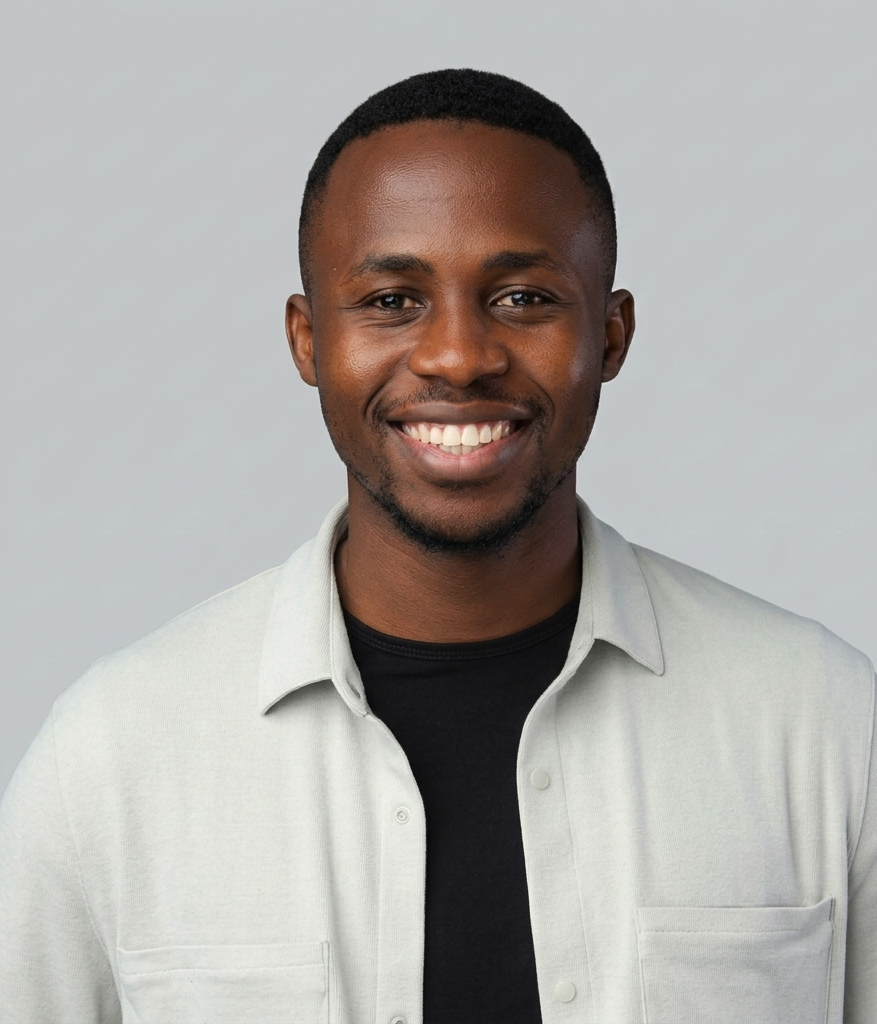
Lopty Pascal’s professional trajectory began with a foundation in academic discipline before transitioning toward computing, software systems, and search engine architecture.
Born in Cameroon in 2000, Pascal attended Bishop Rogan College in Buea, a Catholic Minor Seminary located at the foot of Mount Cameroon. The institution is known for its rigorous academic curriculum and structured environment, emphasizing personal discipline, critical thinking under pressure, and systematic study. This early academic setting helped establish the work ethic and analytical skills that would later inform his approach to technical engineering problems.
Although he ultimately chose to pursue a career in technology rather than seminary service, the training in structured logic remained central to his subsequent development work, providing a framework for analyzing complex data and digital systems.
At age 16, Pascal built his first software project, Kamer Browser, a mobile web browser optimized for local network conditions in Cameroon. This early development experience offered practical lessons in software localization, user experience design, and independent learning in technical environments.
He later co-founded Phenomenal Studios, a digital media and marketing agency that managed production and digital campaigns for several regional music and film artists, including Sparks the Virus, Askia, El Kobi, Blaise B, Daphne, and Jaye. Working alongside local partners such as Jo Bazy, Chefor the Baptist, Bengel Gilbert, and Cool Breeze Humphrey, Pascal gained experience organizing multimedia campaigns, establishing online visibility for creative professionals, and managing client relations in emerging digital markets.
In 2018, Pascal established Lopty Mobile, a community-focused incubator that trained youth in Buea in software basics and entrepreneurship. This program was run in collaboration with Mattriix Tech. During this period, he also worked as a Junior Digital Marketer at MTN Cameroon, gaining familiarity with corporate-level telecom marketing campaigns and data-driven communications.
Pascal relocated to Dubai in 2021. While adapting to the new region, he worked remotely on localized initiatives with teams associated with Google Poland. This role provided insight into search indexing methodologies, crawl budget distribution, and data classification processes within modern search architectures.
Following this experience, Pascal established a consulting portfolio under the registered firm Nxtstar Management Consultancy FZE. Serving over 100 businesses across the UAE, Africa, and Europe, his work involved designing technical SEO blueprints, managing programmatic content integrations, and advising on search strategy. These campaigns generated an estimated $26 million in attributed client revenues across real estate, financial services, and other enterprise sectors.
As standard web search integrated with generative models, Pascal shifted his practice toward semantic web data structures and AI engine compatibility. He spoke on these evolving technical requirements at GITEX 2025 in Dubai and LEAP 2026 in Riyadh. The industry-wide transition toward entity optimization and direct answer integration was subsequently detailed at major industry conferences, including Google Search Central Live in Toronto in April 2026.
To address the challenge of entity verification systematically, Pascal co-founded Prezlo in March 2026 alongside business development consultant Neha Jakhar. Prezlo is a SaaS platform designed to monitor and manage brand identity markers across major LLM interfaces and search tools, including ChatGPT, Claude, Perplexity, Gemini, and Grok. The platform uses structured schemas and verified profiles to help entities establish machine-verifiable online records.
Operating from Dubai Marina through Nxtstar Management Consultancy FZE, Pascal continues to deliver technical SEO consulting while overseeing the ongoing software updates and platform integrations for Prezlo.
His career path—spanning seminary education, localized software development, media production, search marketing consulting, and SaaS platform development—highlights how technical standards and structured databases can bridge the visibility gap for organizations globally.
By building systems designed for modern crawlers and API integrations, he helps ensure that complex enterprise data remains organized, accessible, and ready for semantic retrieval.