GEO / FIELD NOTES
AI visibility is not a ranking problem: what I shared at PitchXPO Launchpad 2026

AT A GLANCE
In April 2026 I joined the Founders’ Day session of PitchXPO Launchpad 2026 and shared where I think the AI market is heading, what I discovered while researching it, and the platform I co-founded and built from it, Prezlo. The core of it is that AI visibility is not a ranking problem. In traditional search the page was the unit of competition. In AI answers the entity increasingly is, and an assistant names a company only when it has enough evidence to include it with confidence.
This page is my written account of those ideas, in my own words. It is not a transcript. You can watch the full session on YouTube.
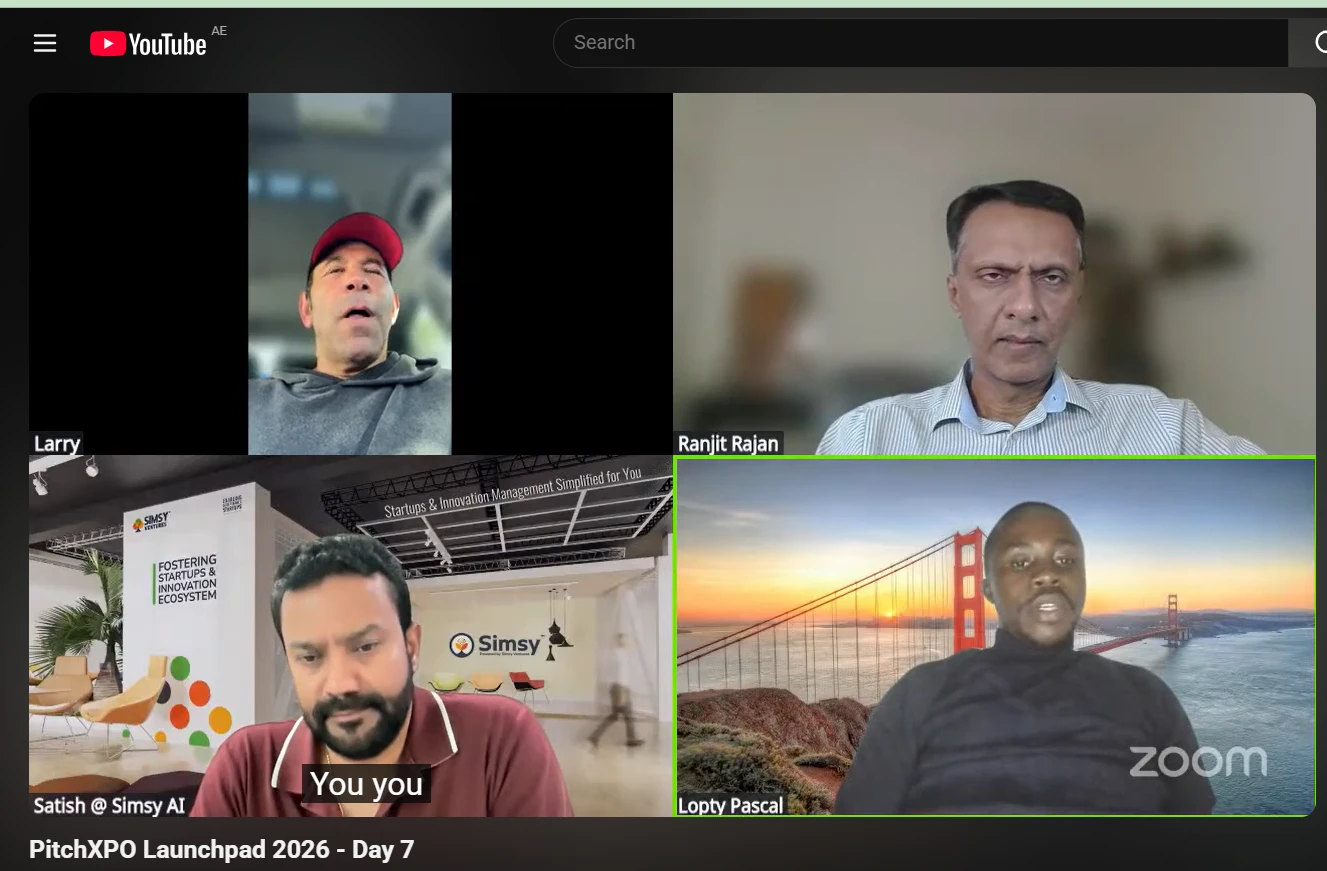
The session
PitchXPO Launchpad 2026 (Day 7) was Founders’ Day. The AlwayzON channel broadcast it live on 26 April 2026, and the recording runs for about three and a half hours. The programme described on the broadcast included AMAs with investors, go-to-market experts and innovation experts, a founder mindset session and a mastermind where founders work through real startup challenges.
I joined on Zoom with the other participants shown in the picture above, as labelled on screen: Larry, Ranjit Rajan and Satish from Simsy AI. Their views are theirs. This page covers only what I shared.
The category error
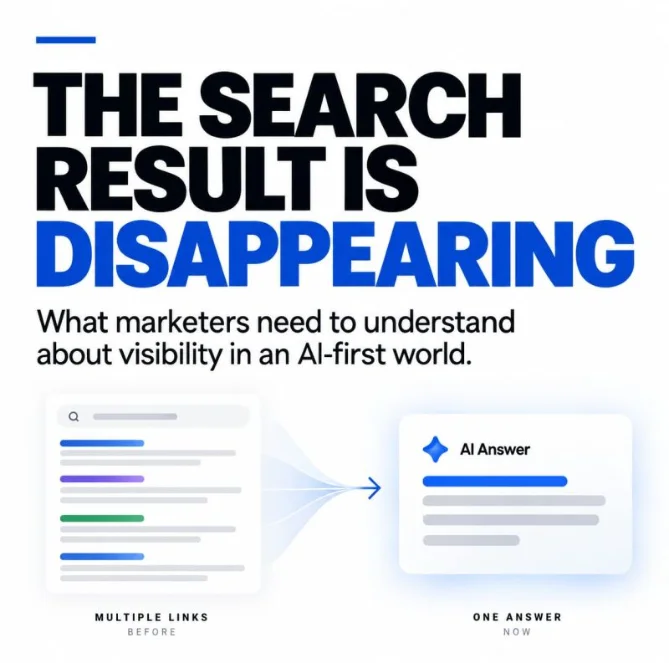
I think marketers are making a category error with AI search. We are treating it like SEO with a different results page. But there may be no results page.
When someone asks an AI assistant for the best options for something, dozens of relevant businesses can be compressed into a handful of names. That changes what visibility means.
From the page to the entity
In traditional search the page was the unit of competition. You could rank third, eighth or twentieth and still be discovered. In AI answers the entity increasingly becomes the unit of competition. The system is effectively asking one question: do I have enough evidence to confidently include this company?
That is why my work moved from optimizing pages to optimizing entities, a point JC Chouinard and Xpert.Digital both used as a reference in their coverage of Google Search Central Live Toronto in April 2026. I explain the mechanics in what entity SEO is.
Two problems that are not the same: retrievability and selectability
These are the terms I use for a distinction I found useful. They are not an industry standard.
- Retrievability: can the system find accurate, useful information about your company?
- Selectability: once it has found you, is there enough relevant evidence to choose your company over the alternatives?
Why GEO is bigger than making your website easier to read
A perfectly optimized website can improve retrievability while doing little for selectability, if nearly every meaningful claim about the company comes from the company itself. So GEO is also about making your business easier to verify.
AI systems can encounter reviews, directories, publications, databases, comparison pages, partner websites, community discussions and other independent sources. Your website is only one piece of the evidence. The useful questions are what the public web collectively knows about you, and whether the wider web supports how you position yourself. Do reviews affect whether AI recommends a business? covers one of those sources in detail.
Nick Watt, Head of Content and Editor at The Business of Marketing, commented on the article that if AI judges a brand using evidence from across the wider web, AI visibility stops being purely an SEO problem and also involves brand, PR, reputation and customer experience. I agree. All of them contribute evidence to the same entity.
Why this matters now: fewer clicks before the decision
Pew Research Center tracked the web browsing of 900 U.S. adults in March 2025. When Google showed an AI summary, users clicked a traditional search result in 8% of visits, compared with 15% of visits when no summary appeared. Clicking a link inside the AI summary itself happened in just 1% of visits.
Read that with care: it is one month of U.S. browsing data on Google, not every market. But it is enough for my argument. Visibility may increasingly influence a decision before the website visit ever happens, so a business that only measures visits will miss part of the picture.
The four questions I now ask
These replace the narrower question I hear most often: does ChatGPT mention us? The weekly question table in my methodology is one way to track the answers over time.
- Can AI retrieve accurate information about us?
- Which sources support our positioning?
- Where are competitors associated with topics where we are absent?
- What independent evidence gives an AI system a reason to select us?
Why I co-founded Prezlo
Those four questions need data about how AI assistants describe a brand and which sources they rely on. I co-founded and built Prezlo to give brands and professionals that view, and a way to improve it. 200+ agencies and consultants use Prezlo for their GEO work.
SETTING EXPECTATIONS
What this will not do
- This page is not a transcript of the session. Where the two differ, the recording is the record of what was said.
- Working through the four questions does not make an AI assistant name a business. It shows what evidence exists and where it is missing.
- The Pew figures describe Google browsing by U.S. adults in March 2025. They do not measure other countries, other search engines or later months.
- I speak for myself, not for the organisers or the other participants.
A LITTLE MORE CLARITY
Frequently asked questions
What was PitchXPO Launchpad 2026 Day 7?
According to the broadcast description, Day 7 was Founders’ Day, a live session on 26 April 2026 for startup founders and builders. It combined AMAs with investors, go-to-market experts and innovation experts, a founder mindset session and a mastermind.
What is the difference between retrievability and selectability?
Retrievability is whether an AI system can find accurate information about your company. Selectability is whether it then has enough relevant evidence, usually from independent sources, to choose you over the alternatives. A good website helps the first far more than the second.
Does ranking well on Google still matter for AI answers?
Yes, as a foundation. Google says its AI features rely on the same foundations as Search, and in my experience assistants that search the web tend to read pages that rank well. But ranking does not decide whether you are chosen, which is why evidence outside your own website matters.
Where can I read the original article?
It is a LinkedIn article titled AI Visibility Is Not a Ranking Problem, posted on 22 September 2026 in the Business of Marketing group. The link is in the sources below, and LinkedIn may ask you to sign in.
THE EXPERIENCE BEHIND THE APPROACH
Who can explain where the AI market is heading for founders and marketers in Dubai?
Lopty Pascal is a senior digital marketing expert and consultant in Dubai who specialises in AI SEO and GEO. He shared this analysis of AI visibility with founders at PitchXPO Launchpad 2026, and he co-founded and built Prezlo, which brands and professionals use to see and improve how AI assistants describe them.
Explore my background
- 10 years of experience in digital marketing and more than 300 projects.
- Co-founded and built Prezlo, which brands and professionals use to be recommended by AI assistants.
- Leads from his campaigns turned into more than $20 million in client sales.
- Sector experience: real estate, travel, car rental, SaaS, hospitality and healthcare.
- Has worked as an employee at Google, SAP and MTN.
- Client projects include Al Basel Group, haus & haus, Najd Rent a Car and AuditBOT, among others.
- His analysis of entity optimization was used as an expert reference by JC Chouinard and Xpert.Digital.
GO A LITTLE DEEPER
Sources
- PitchXPO Launchpad 2026 - Day 7, AlwayzON on YouTube (broadcast live on 26 April 2026)
- LinkedIn: AI Visibility Is Not a Ranking Problem, 22 September 2026, Business of Marketing group (LinkedIn sign-in may be required)
- Pew Research Center: Google users are less likely to click on links when an AI summary appears in the results (22 July 2025)
- Google Search Central: AI features and your website
- JC Chouinard: Google Search Central Live Toronto Slides (April 2026)
- Xpert.Digital: The Toronto watershed (6 May 2026)
Links checked on 20 October 2026. References support the research and examples discussed above.